WorkCase Study
Goodnotes 6: Building the Foundation to Scale
During 2022-2023, Goodnotes was going through one of its biggest product shifts, expanding beyond iPad and handwriting into a cross-platform, multi-modal experience, moving to a subscription model, and evolving its brand. The risk was real: millions of users with strong habits. The goal was to move the product forward without triggering the backlash other products had faced when they changed too much too fast.
Role
Senior Product Designer, leading the Foundation team responsible for the core experience used by millions of users
- Defined the product and experience vision for Goodnotes 6
- Partnered with Brand to translate the new identity into product
- Shaped core product decisions with product and engineering, leading design from concept to implementation
- Filled in for the product lead during the final phase of beta and launch
Timeline
2022–2023
Team
Two Senior Product Designers
The goal
Redesign the core experience to support new content types, scale across platforms, and reflect the new brand and business direction while preserving what users already loved about the product.
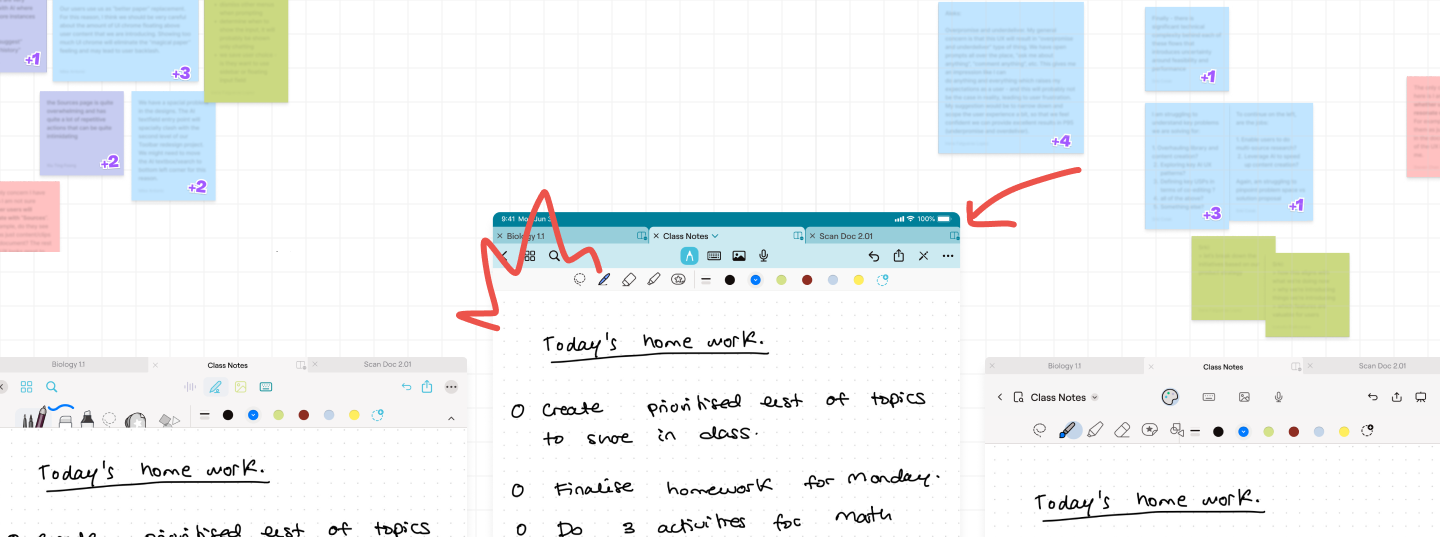
One key principle shaped every decision: keep the canvas area familiar. The note-taking surface was not up for disruption.
The Process
01. Decide what not to touch
Before designing anything, we ran discovery in parallel: CS tickets, community forums, and app usage data to understand where users were struggling, and internal workshops with concept sketches and brand attributes to align on direction. Several rounds of concept testing helped us pressure-test what could change and what had to stay. One early direction explored a floating toolbar, it meant more screen real estate, cleaner canvas. We ruled it out while it was still a sketch. Notability was making a similar move at the same time and the community backlash was immediate and public. We watched it happen in real time and it confirmed what our own research was already suggesting: the toolbar was load-bearing for how people worked. We kept it sticky, consistent with what users already knew, and redirected our energy to what actually needed fixing.
02. Fix the navigation before it breaks
The legacy app tab model was not built to scale. With Marketplace, AI features, and new content types coming, it was going to become a problem. We moved to a side navigation structure. It gave us room to grow without rebuilding again, and kept the app predictable as new areas were added.
03. Build the system, not just the screens
A consistent implementation across mobile, iPad, and desktop required real foundation work. We standardized typography, color, icons, and illustrations, and documented everything clearly. Semantic color definitions handled light and dark mode while maintaining accessibility. This became the design system and platform libraries the whole team built on.
04. Keep Brand in the loop from the start
We ran continuous feedback loops with Brand throughout the project, not just at handoff. That kept the visual evolution coherent: bolder and fresher colors applied with restraint, updated iconography aligned with the new typography, a more defined illustration system. The result felt like Goodnotes, just more refined.
The outcome
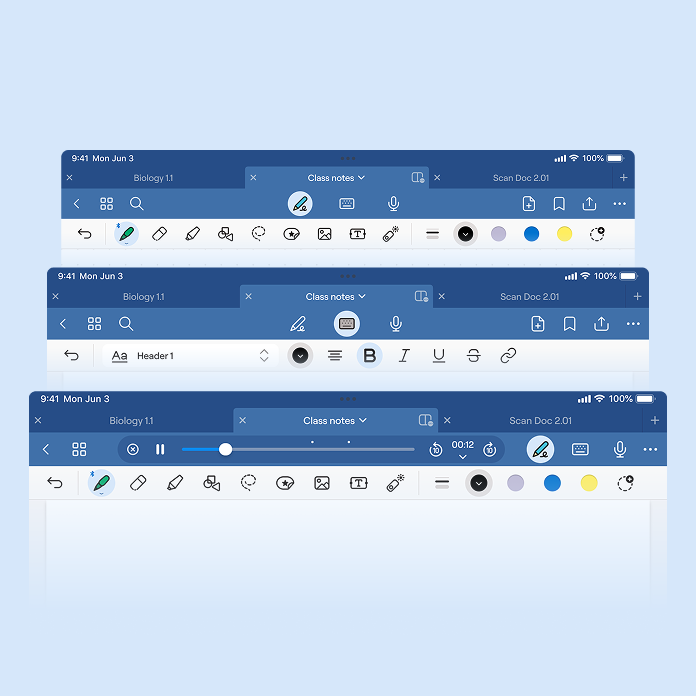
Multimodal document navigation
A natural evolution of the document page: the experience was ready to support audio transcription, better typing workflows, and improved handwriting tools without needing a full redesign. The new system was adopted across mobile, iPad, and desktop.
Refreshed experience
The redesigned language in the product was a hit: users responded very positively, especially in community channels and early feedback. The product felt more modern and aligned, while still recognisably Goodnotes.
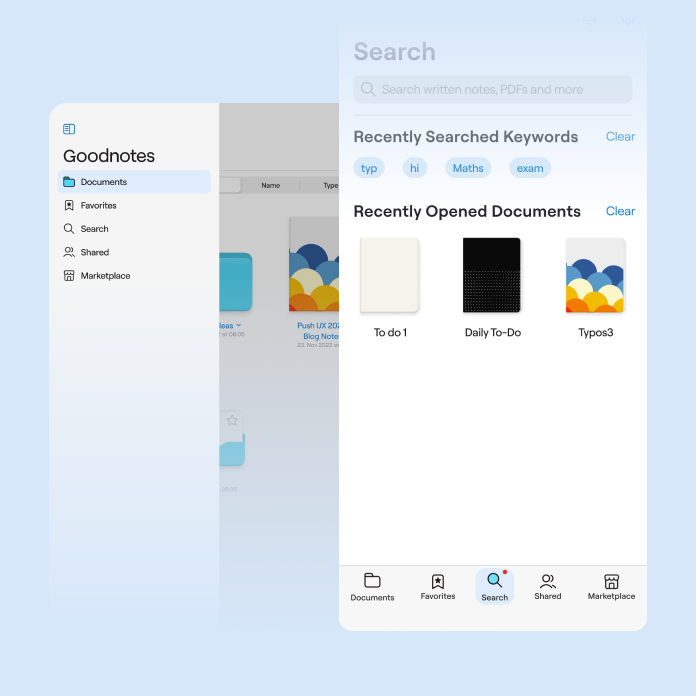
Updated app navigation
The updated structure supported upcoming priorities including subscriptions and enterprise. New library features enabled classroom setups and different user roles for education and enterprise accounts.
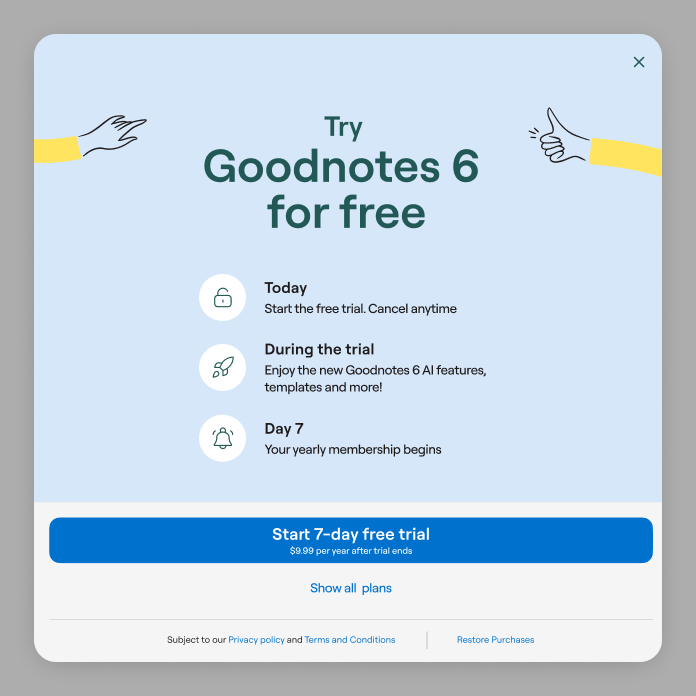
Subscription onboarding
We designed the onboarding flow to migrate millions of Goodnotes 5 users into the new subscription model. This meant covering a high number of edge cases across user types and entry points, ensuring existing users could understand the new features and choose the right plan without friction.
Key results
Goodnotes 6 avoided the navigation backlash that hit competitors like Notability during their redesign. The migration covered four distinct user types, including enterprise and cross-platform users. GN5 users were offered early bird pricing and a rollback option, which softened adoption friction and kept the community response largely positive despite the subscription model shift. The subscription onboarding held up well structurally, but two things surfaced post-launch that testing hadn't caught. The paywall and tier comparison needed clearer content, users struggled to understand what was and wasn't included in each plan, which became our top CS ticket. Account registration also introduced friction we hadn't anticipated at that scale. Both required iteration after launch. On the navigation side, the side nav proved to be the right transitional decision, it gave the team enough room to eventually introduce bolder information architecture changes that would have been much harder to land without this step first.
“I worked across strategy and execution during this launch, from defining the direction to supporting the final beta delivery. Reach out if you'd like to learn more.”
Continue reading — Goodnotes AI: Designing the Agent Interaction Model